The Chain-Of-X phenomenon In LLM prompting
Last Updated
January 30, 2025

Cobus Greyling
Read Time

Summary
Lorem ipsum dolor sit amet, consectetur adipiscing elit. Suspendisse varius enim in eros elementum tristique. Duis cursus, mi quis viverra ornare, eros dolor interdum nulla, ut commodo diam libero vitae erat. Aenean faucibus nibh et justo cursus id rutrum lorem imperdiet. Nunc ut sem vitae risus tristique posuere.
What’s on this page
In a recent post, I discussed the seemingly emergent abilities of LLMs. A new study argues that Emergent Abilities are not hidden or unpublished model capabilities which are just waiting to be discovered, but rather new approaches of In-Context Learning which are being built.
A number of recent papers have shown that on user instruction to do so, Large Language Models (LLMs) are capable of decomposing complex problems into a series of intermediate steps.
This basic principle was introduced by the concept of Chain-Of-Thought(CoT) prompting for the first time in.
The basic premise of CoT prompting is to mirror human problem-solving methods, where we as humans decompose larger problems into smaller steps.
The LLM then addresses each sub-problem with focussed attention hence reducing the likelihood of overlooking crucial details or making wrong assumptions.
A chain of thought is a series of intermediate natural language reasoning steps that lead to the final output, and we refer to this approach as chain-of-thought prompting. ~ Source
The breakdown of tasks make the actions of the LLM less opaque with transparency being introduced.
Areas where Chain-Of-Thought-like methodology has been introduced are:
- Chain-of-Thought Prompting
- Multi-Modal Reasoning
- Multi-Lingual Scenarios
- Knowledge Driven Applications
- Chain-of-Explanation
- Chain-of-Knowledge
- Chain-of- Verification
- IR Chain-of-Thought
- LLM Guided Tree Of Thought
- Chain-Of-Note
- Least-To-Most Prompting
- Chain Of Empathy
And more…
Least-to-most prompting can be combined with other prompting techniques like chain-of-thought & self-consistency. For some tasks, the two stages in least-to-most prompting can be merged to form a single-pass prompt. — Source
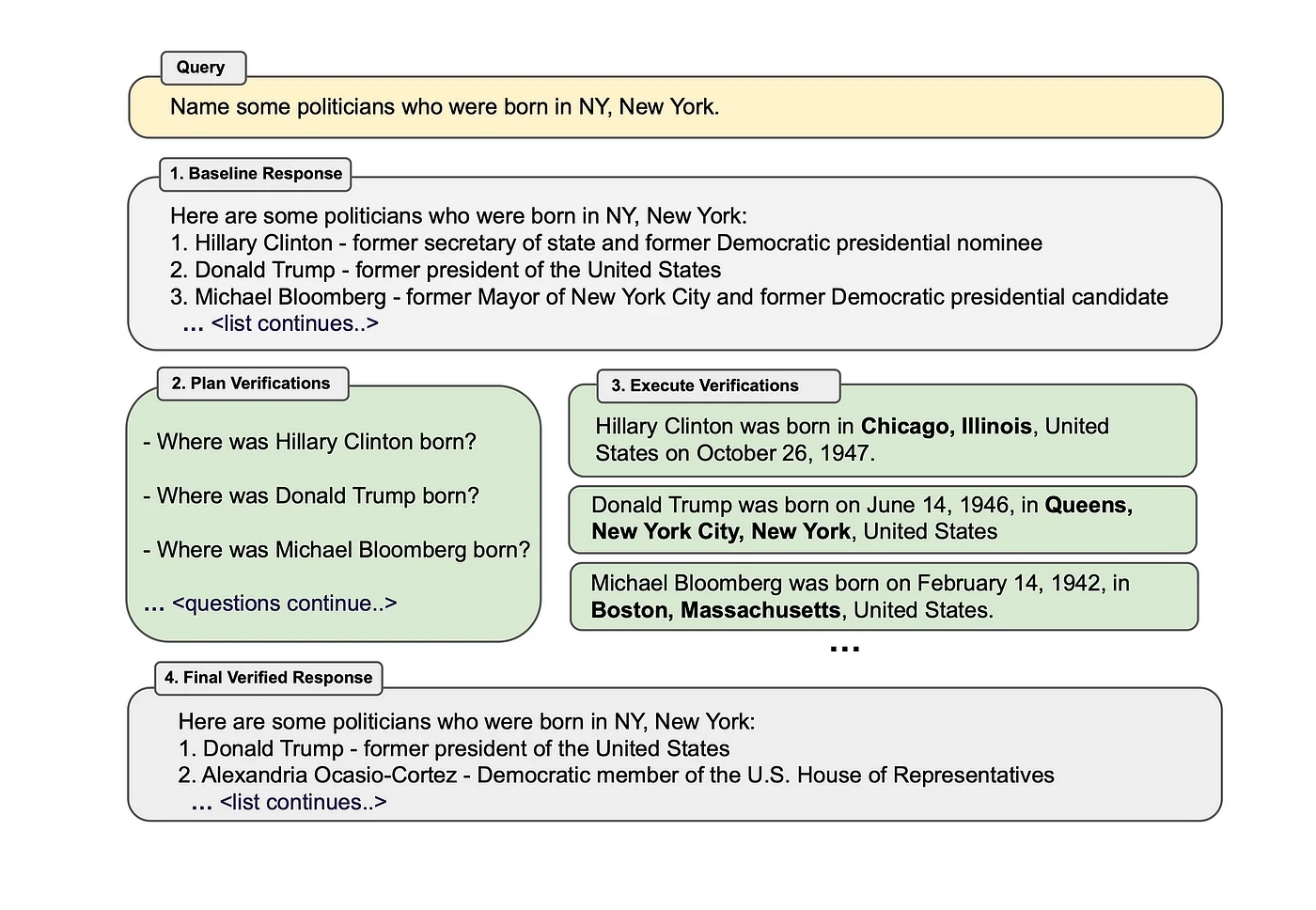
For example, Chain-of-Verification; A recent study highlighted a new approach (CoVe) to address LLM hallucination via a novel implementation of prompt engineering. This approach can be simulated via an LLM playground, and there is already a feature request submitted to LangChain for a CoVe implementation.
Agents
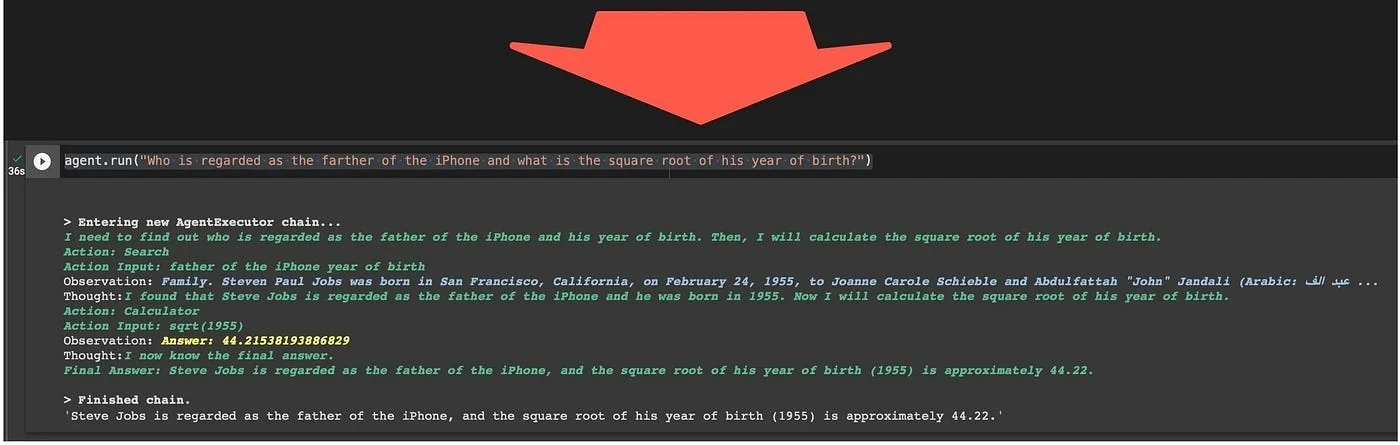
Decomposition also helps autonomous agents to assign sub tasks to an applicable tool.
Below is the decomposed chain-of-thought reasoning of the Agent based on the aforementioned question. The decomposition was performed completely autonomously by the Agent.
As seen in the image above, Chain-of-thought prompting enables large language models to address challenging arithmetic, common sense, and symbolic reasoning challenges.
Rather than adjusting a distinct language model checkpoint for each new task, one can simply provide the model with several input-output examples to demonstrate the task.
In Closing
What is particularly helpful of Chain-Of-Thought Prompting is that by decomposing the LLM input and LLM output, it creates a window of insight and interpretation.
This Window of decomposition allows for manageable granularity for both input and output, and tweaking the system is made easier.
Chain-Of-Thought Prompting is ideal for contextual reasoning like word problems, common-sense reasoning, math word problems and is very much applicable to any task that we as humans can solve via language.
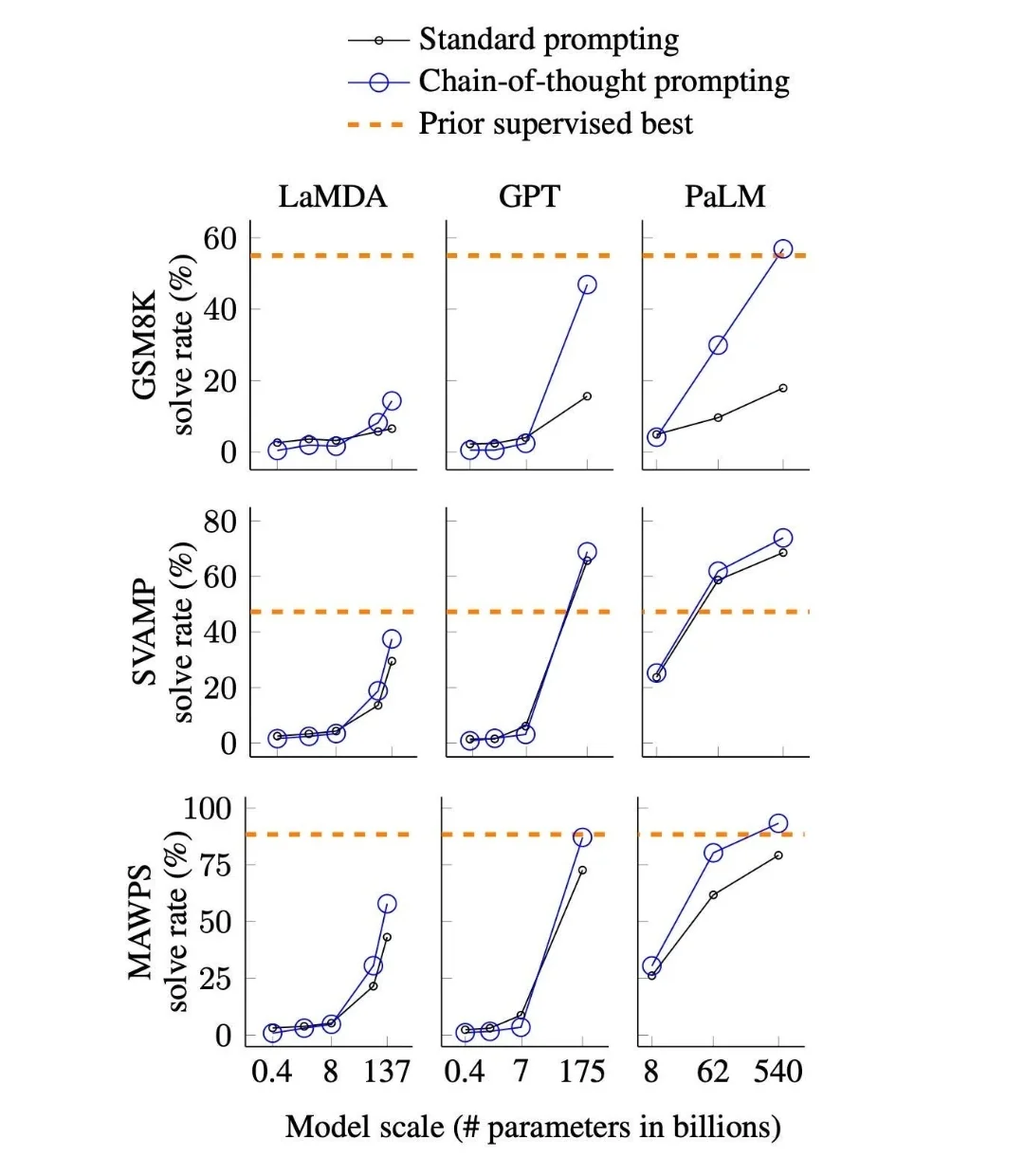
The image below shows a comparison of percentage solve rate based on standard prompting and chain-of-thought prompting.
Chain of thought reasoning provides reasoning demonstration examples via prompt engineering.
Share
Tags