
Juhi Tiwari
Juhi is a Research Lead at Kore.ai, driving market intelligence, competitive insights, and analyst-facing strategy that strengthens the company’s industry positioning. She also works as a content strategist, creating deep technical content that translates complex AI concepts into clear, compelling narratives. Her work supports Kore.ai’s vision, credibility, and thought leadership across the AI landscape.
Articles by this author

What is agentic reasoning, how AI agents think, learn and make decisions?
Agentic reasoning enables AI agents to move beyond generating responses by connecting goals to planning, actions, tools, feedback, and adaptive decision-making. This article explores AI agent reasoning, Plan-Retrieve-Generate, ReAct, planning, reflection, multi-agent reasoning, continuous learning, and contextual decision-making. It also explains how Kore.ai’s Dual-Brain Architecture combines agentic reasoning with deterministic execution, governance, and controlled enterprise workflows.
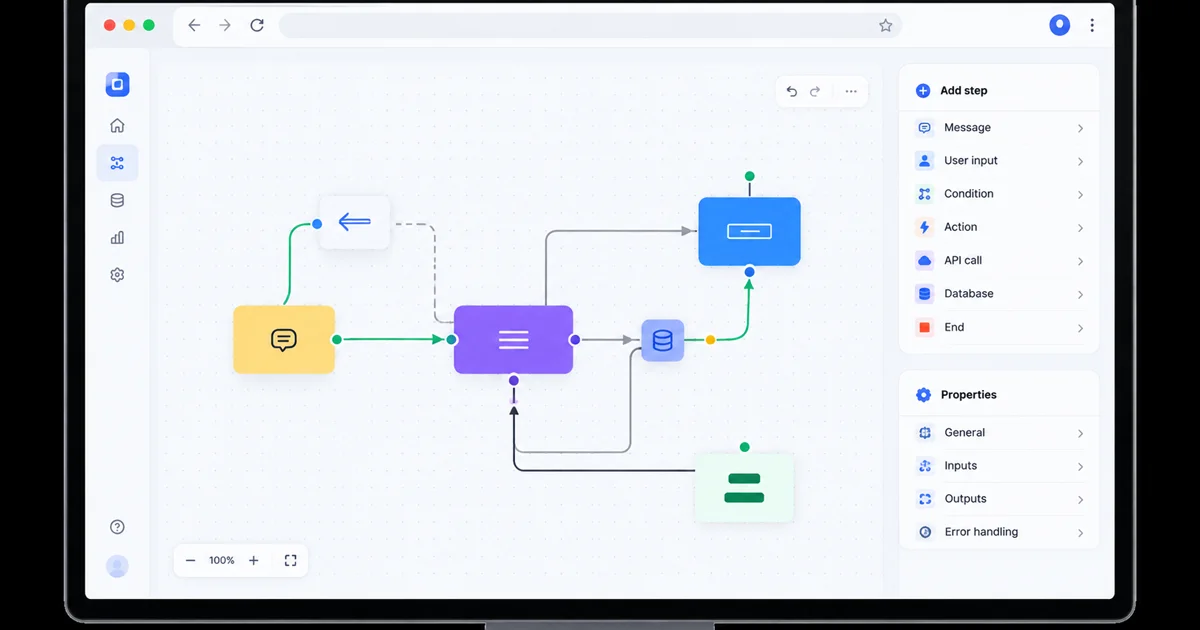
What are agent protocols, and why every enterprise needs them now
AI agent protocols enable AI agents to communicate, exchange context, coordinate tasks, and collaborate across platforms, vendors, and enterprise systems. This article explains MCP, A2A, and ACP, highlighting their roles in orchestration, agent collaboration, and edge execution. It also explores interoperability, security, identity, schema governance, observability, lifecycle management, and vendor independence, showing how shared protocols create the communication backbone for scalable, governed enterprise AI.

Understanding AI types and functions
Types of artificial intelligence can be classified by capabilities and functionality, from Artificial Narrow Intelligence (ANI) and Artificial General Intelligence (AGI) to Artificial Superintelligence (ASI), as well as reactive, limited-memory, theory-of-mind, and self-aware AI. This article explains how these AI types differ, where they are used, and how intelligent automation, agentic AI, and multi-agent systems are shaping the future of enterprise AI.
Small language models: The future catalyst for organizational success
Small Language Models (SLMs) provide efficient, specialized AI for enterprise use cases where accuracy, latency, security, and cost matter. This article explores SLM fine-tuning, domain specialization, privacy, real-time inference, customization, and cost efficiency. It also highlights Kore.ai XO GPT, Kore.ai’s proprietary SLM approach, with precisely engineered models under 10 billion parameters for faster, secure conversational AI, including capabilities such as query rephrasing and conversation summarization.
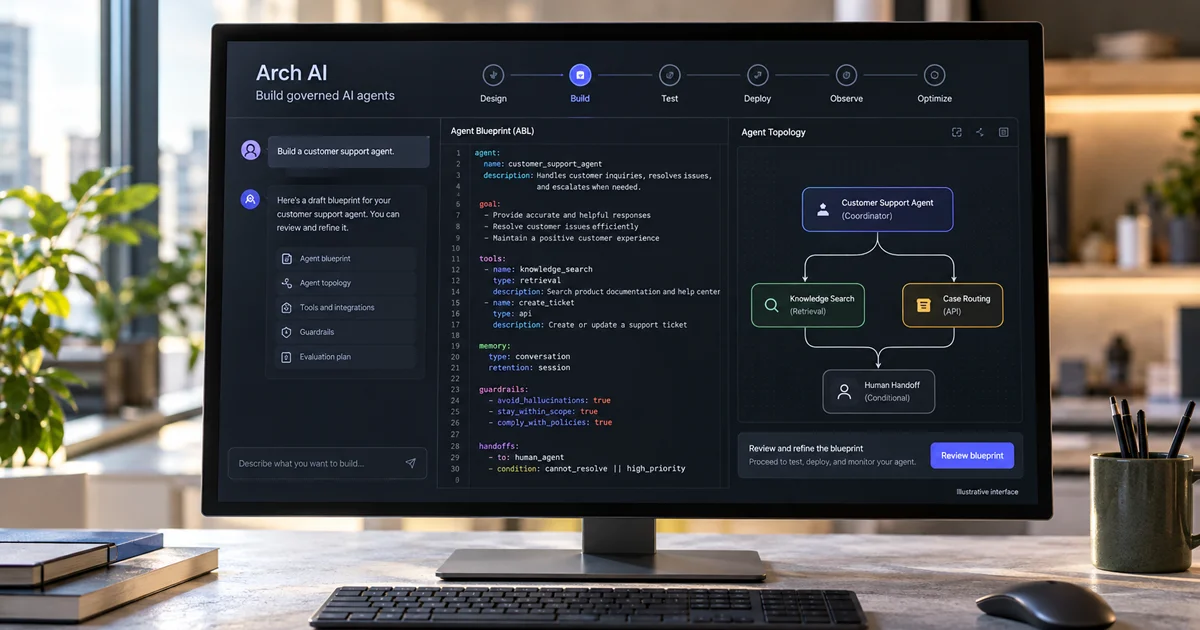
What is RAG - Retrieval-Augmented Generation ?
Retrieval-Augmented Generation (RAG) combines information retrieval with generative AI to ground responses in current, authoritative enterprise data. This article explains semantic search, vector retrieval, hybrid retrieval, multi-hop retrieval, knowledge grounding, contextual answers, and enterprise RAG, and how these capabilities reduce hallucinations and improve accuracy, transparency, and time-to-insight. It also explores Agentic RAG, which adds reasoning, planning, validation, and workflow orchestration for enterprise AI.
What is multi-agent orchestration in agentic systems
Multi-agent orchestration coordinates specialized AI agents so they can share context, delegate tasks, collaborate, resolve conflicts, and execute complex workflows toward a shared goal. This article explains AI agent orchestration, dynamic role allocation, shared memory, enterprise integrations, governance, observability, human-in-the-loop, and real-time monitoring. It also describes how Kore.ai enables supervisor-based orchestration, parallel and sequential execution, conflict resolution, and governed multi-agent workflows at enterprise scale.